Most visitors to Langtang stay on the valley trail, looking up at the big peaks from below. Langsisa Ri peak invites you to go higher. Sitting deep in the upper Langtang valley near the Tibetan border, this 6,427-meter (21,086 ft) peak offers a quiet, technical climb with views across Langtang Lirung, Langshisha Ri’s neighbors, and the wide glaciers of the Langshisha Kharka basin. It suits climbers who want a serious Himalayan objective without the crowds of the Everest region.
A note on naming: the peak is variously spelled Langsisa Ri, Langshisha Ri, or Langshisha Ri. The mountain most often associated with this name in Langtang is Langshisha Ri, and the details below follow that peak.
Overview of Langsisa Ri Peak
Langsisa Ri rises above the Langshisha valley, a side valley that branches from the main Langtang trail beyond Kyanjin Gompa. The area lies inside Langtang National Park, one of Nepal’s most beautiful protected regions, and was affected by the 2015 earthquake, after which local communities and trekking businesses worked hard to rebuild.
Unlike the popular trekking peaks such as Island Peak or Mera Peak, Langsisa Ri sees very few climbers each season. The approach is quiet, camps are remote, and the climb itself demands real alpine skills. Details such as permit classification, exact route conditions, and the required team size can change, so confirm them with a licensed agency before planning.
A typical expedition lasts 18 to 24 days, covering the approach trek, acclimatization, base camp, a high camp, the summit push, and weather buffer days.
Why Climb Langsisa Ri?
Remote and uncrowded. The Langshisha valley is far quieter than the main Langtang trail. You may spend days without meeting other groups, which gives the climb a true expedition feel.
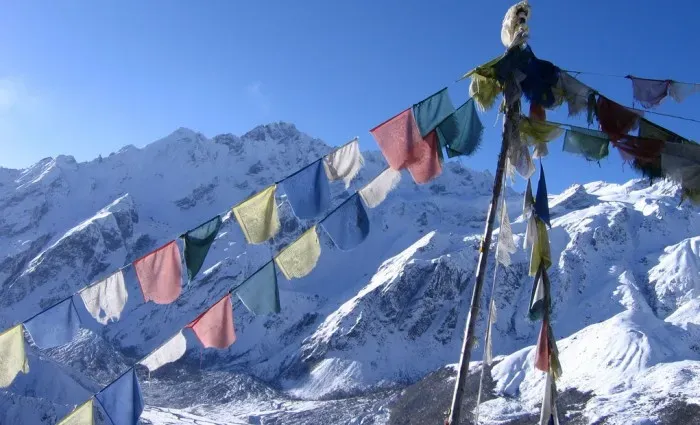
Spectacular scenery. From high on the mountain you see Langtang Lirung (7,227 m), Kimshung, Yala Peak, Dorje Lakpa, and the Tibetan plateau beyond. Glaciers, moraines, and wide alpine meadows fill the valley below.
Rich cultural approach. The lower trail passes Tamang villages, prayer walls, and monasteries. The people of Langtang have a distinctive culture shaped by their Tibetan roots, and homestays give a warm introduction to it.
Excellent training ground. The climb builds skills in glacier travel, crevasse navigation, and steep snow, and is a good step toward peaks such as Himlung Himal, Chulu East, or larger expeditions.
Wildlife and nature. Langtang National Park shelters red pandas, Himalayan tahr, musk deer, and, with luck, snow leopards, along with rhododendron and bamboo forests in the lower valley.
Sample Itinerary
Itineraries vary by operator and conditions. A typical plan looks like this.
Kathmandu to Syabrubesi. A long drive north takes you to the trailhead through terraced hills, with views of Ganesh Himal and Langtang Lirung as you climb.
Syabrubesi to Lama Hotel and Langtang Village. The trail follows the Langtang Khola through dense forest, rising steadily to the open valley. Langtang Village (3,430 m) was rebuilt after the earthquake and is a welcoming place to rest.
Kyanjin Gompa (3,870 m). Many itineraries allow an acclimatization day here, with hikes to Kyanjin Ri or the nearby glacier viewpoints. A cheese factory and a small monastery add local color.
Langshisha Kharka. From Kyanjin, the route turns into the Langshisha valley, following a rough trail through moraine and yak pastures. The valley is wide and wild, with the mountain slowly emerging ahead.
Base camp (about 4,500 to 4,900 m). Sherpa staff and porters set up camp near the glacier. The team rests, sorts gear, and practices rope work, crampons, and ascending skills.
High camp (about 5,500 to 5,700 m). The climb from base camp to high camp is steep and sometimes involves glacier crossings. High camp is exposed, cold, and compact, and climbers usually eat early, hydrate, and try to sleep before the summit attempt.
Summit day. The push starts in the early hours, when the snow is firmest. The route follows glacier terrain and snow slopes toward the summit ridge, with fixed ropes where needed. Summit day often lasts 9 to 13 hours round trip, depending on conditions and pace.
Descent and return. After returning to base camp, the team retraces the route to Kyanjin, Langtang, Lama Hotel, and Syabrubesi before driving back to Kathmandu.
Difficulty and Fitness Requirements
Langsisa Ri is a technical alpine peak, and it should be treated as more demanding than a standard trekking peak. Key challenges include:
-
Altitude: Several days above 4,500 m and a summit near 6,400 m.
-
Terrain: Glaciers, crevasses, steep snow, and possible ice sections.
-
Remoteness: Long approach, limited services, and few other parties nearby.
-
Weather: Cold, wind, and rapidly changing conditions are common.
Previous experience at altitude is strongly recommended, ideally including a trek above 5,000 meters or a climb such as Island Peak, Mera Peak, or Yala Peak. You should be comfortable with crampons, ice axe, harness, and fixed ropes. If you are new to mountaineering, arrange a training session with your guides before the climb.
Begin physical preparation three to four months in advance, focusing on cardio, leg strength, and hiking with a loaded pack. Stair climbing, running, cycling, and core exercises all help build the endurance needed for long summit days.
Best Time to Climb
The best seasons are spring (April to May) and autumn (late September to November).
-
Autumn offers the most stable weather, cold dry snow, and clear views, making it the most popular season.
-
Spring brings warmer days and longer daylight, though afternoon clouds and wind are common.
-
Winter is extremely cold, and heavy snow can make the route unsafe.
-
Monsoon (June to August) brings rain, cloud, and unstable snow, and it is generally not recommended.
Permits and Regulations
Expect to arrange the following through a registered agency:
-
Climbing permit from the relevant Nepali authority for the peak
-
Langtang National Park entry permit
-
Local area or TIMS permits, where applicable
-
A licensed guide and support staff
Fees and rules vary and change over time, so confirm the current requirements with your operator. Climbing without professional support is not advisable, given the crevasse and avalanche hazards.
Essential Gear
-
Mountaineering boots suitable for crampons
-
Crampons, ice axe, harness, helmet, carabiners, and ascender
-
Insulated down jacket and a sleeping bag rated to at least -20°C
-
Layered clothing, gloves, warm hat, balaclava, and glacier sunglasses
-
Trekking poles, headlamp with spare batteries, and water bottles
-
Water purification tablets and a comprehensive medical kit
Many agencies rent technical gear in Kathmandu, reducing cost and baggage. Confirm what is included in your package.
Acclimatization and Safety
Altitude sickness is the main risk. Ascend gradually, drink plenty of fluids, avoid alcohol, and never ignore symptoms such as persistent headache, nausea, dizziness, or breathlessness. Build rest days into your schedule and be prepared to descend if you do not improve. Other hazards include crevasses, avalanches, rockfall, and sudden storms, so a professional guide who assesses conditions each day is your best safety asset. Travel insurance covering helicopter evacuation and climbing up to at least 6,500 meters is essential.
Responsible Climbing
The Langtang region is fragile and still recovering in places. Carry out all non-biodegradable waste, avoid single-use plastics, and stay on established routes. Respect local customs by walking clockwise around mani walls and stupas, and ask before photographing people. Support local lodges, buy local products, and ensure guides and porters are paid fairly, insured, and properly equipped.
Conclusion
Langsisa Ri Peak is a rewarding choice for climbers who want a quiet, technical Himalayan objective. The route combines a cultural approach through Tamang villages, the wild beauty of the Langshisha valley, and a glacier climb with far-reaching views over the Langtang range. It demands fitness, skill, and careful acclimatization, but it repays them with solitude and a genuine sense of exploration.
If you are ready to step beyond the standard trekking peaks, this mountain is worth serious consideration. Train well, choose a reputable operator, allow time for weather and acclimatization, and treat the mountain with respect. You will finish with a summit few climbers have reached and a deeper connection to one of Nepal’s most beautiful valleys.