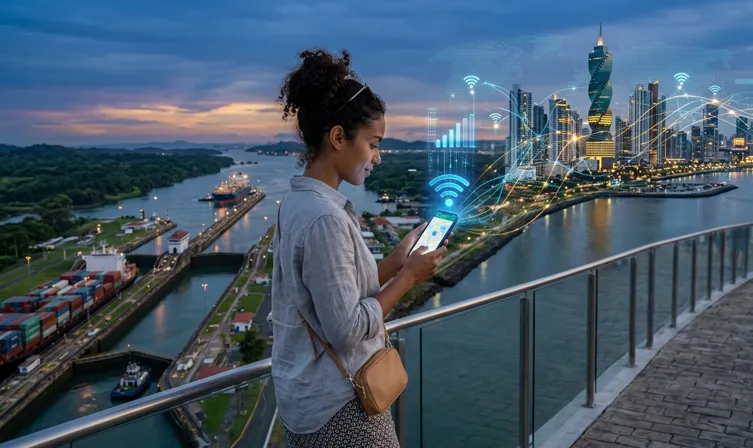
Arriving in a new country, few things offer as much immediate peace of mind as knowing you can reliably connect with the outside world. In Panama, a country of vibrant culture, stunning natural beauty, and bustling urban centers, staying connected isn’t just a convenience – it’s often a necessity for navigation, emergency contact, translating on the fly, and sharing your incredible experiences. Whether you’re exploring the historic Casco Viejo, hiking through the cloud forests of Boquete, or relaxing on the San Blas Islands, a reliable cell signal can make all the difference. This guide cuts through the noise to give you the practical, up-to-date information you need to ensure you’re never out of touch.
Navigating Panama’s Mobile Network Landscape
Panama’s mobile network infrastructure is fairly robust, especially in urban areas and along major tourist routes. The primary carriers are +Movil (formerly Cable & Wireless Panama), Tigo (which acquired Movistar’s operations), and Claro. These providers offer 4G LTE services in most populated regions, providing decent speeds for streaming, browsing, and video calls. However, venturing into remote areas, national parks, or some of the more secluded islands will inevitably lead to patchy or non-existent coverage. Before you go, it’s wise to check if your phone is unlocked and supports the common frequencies used in Panama (typically 850/1900 MHz for 2G/3G and varying bands for 4G LTE, though most modern global phones are compatible).
Ditching Roaming: Why It’s a Must
For most international travelers, using your home provider’s roaming service in Panama is a financial pitfall to be avoided at all costs. While convenient in theory, the per-minute, per-text, and especially per-megabyte charges can quickly accumulate into a shocking bill upon your return. Many travelers have fallen victim to hundreds, if not thousands, of dollars in unexpected roaming fees. Before you even land in Panama, make it a priority to disable data roaming on your smartphone. This simple step can save you a significant amount of money and stress, forcing you to consider more economical and efficient alternatives for staying connected.
Local SIM Cards: Your On-the-Ground Connection
Purchasing a local prepaid SIM card is a time-tested strategy for affordable connectivity. Upon arrival at Tocumen International Airport (PTY), you’ll find kiosks for major carriers where you can buy a SIM card. Alternatively, official carrier stores (e.g., +Movil, Tigo, Claro) are plentiful in shopping malls and city centers across Panama. You will need your passport for registration, as this is a legal requirement. A basic SIM card typically costs a few dollars, and then you’ll purchase a prepaid data and call package, known as a ‘prepago’ plan. For instance, you might find a 7-day plan with 5GB of data for around $10-$15. While this option offers excellent value and a local number, it does require a physical SIM swap and a brief activation process, often with the assistance of store staff.
The eSIM Advantage: Seamless Connectivity for Modern Travelers
For those with compatible smartphones, an eSIM (embedded SIM) offers unparalleled convenience, allowing you to activate a local data plan digitally without needing a physical SIM card. This means you can purchase and activate your plan before you even leave home, ensuring you have data the moment your plane touches down. Many travelers appreciate the ability to keep their home country’s physical SIM card in their phone for receiving critical texts or calls, while using the eSIM for all their data needs abroad. Activating an eSIM typically involves scanning a QR code provided by the service and following a few simple steps in your phone’s settings. For straightforward eSIM for Panama, consider providers that specialize in international travel.
Beyond SIMs: Wi-Fi and Other Connectivity Hacks
While local SIMs and eSIMs provide reliable mobile data, Wi-Fi remains a crucial part of the connectivity puzzle. Most hotels, guesthouses, restaurants, and cafes in Panama offer free Wi-Fi to their patrons. While convenient, exercise caution when using public Wi-Fi networks, as they are often less secure. Using a Virtual Private Network (VPN) is highly recommended to protect your personal data. For travelers who need consistent connectivity for multiple devices or prefer not to rely on public Wi-Fi, a portable Wi-Fi hotspot device can be a good investment. Furthermore, always download offline maps (like Google Maps or Maps.me) of the areas you plan to visit. This ensures you can navigate even when cell service or Wi-Fi is unavailable.
Communicating Smart: Calls, Texts, and Apps
When it comes to making calls and sending messages, modern apps have largely replaced traditional methods, especially for international communication. WhatsApp is ubiquitous in Panama and is the primary method for texting and calling local contacts over data or Wi-Fi. Other VoIP (Voice over Internet Protocol) apps like Skype, Google Meet, or Zoom are also excellent for staying in touch with friends and family back home, often at a fraction of the cost of traditional international calls. Many local prepaid SIM and eSIM plans also include a small allowance of local minutes and texts, which can be useful for making reservations or contacting local services. Leveraging these apps, in conjunction with your chosen data plan from a reliable a global travel eSIM service, will keep your communication flowing smoothly throughout your Panamanian adventure.